Disclosure: BackSpin and Lewati were both built by Rizaldy Primanta Putra. The link to BackSpin in this article is marked nofollow. Rewards are not guaranteed.
Vibe coding and its wait states
In vibe coding you describe what you want in natural language and let an AI agent write most of the code. The work shifts toward reviewing and steering, and it introduces gaps: the agent scans a directory, runs tests, or generates a large change while you wait.
Those gaps can add up over a day. Most people check messages or switch tabs and lose their train of thought, which is a cost in itself.
What BackSpin proposes
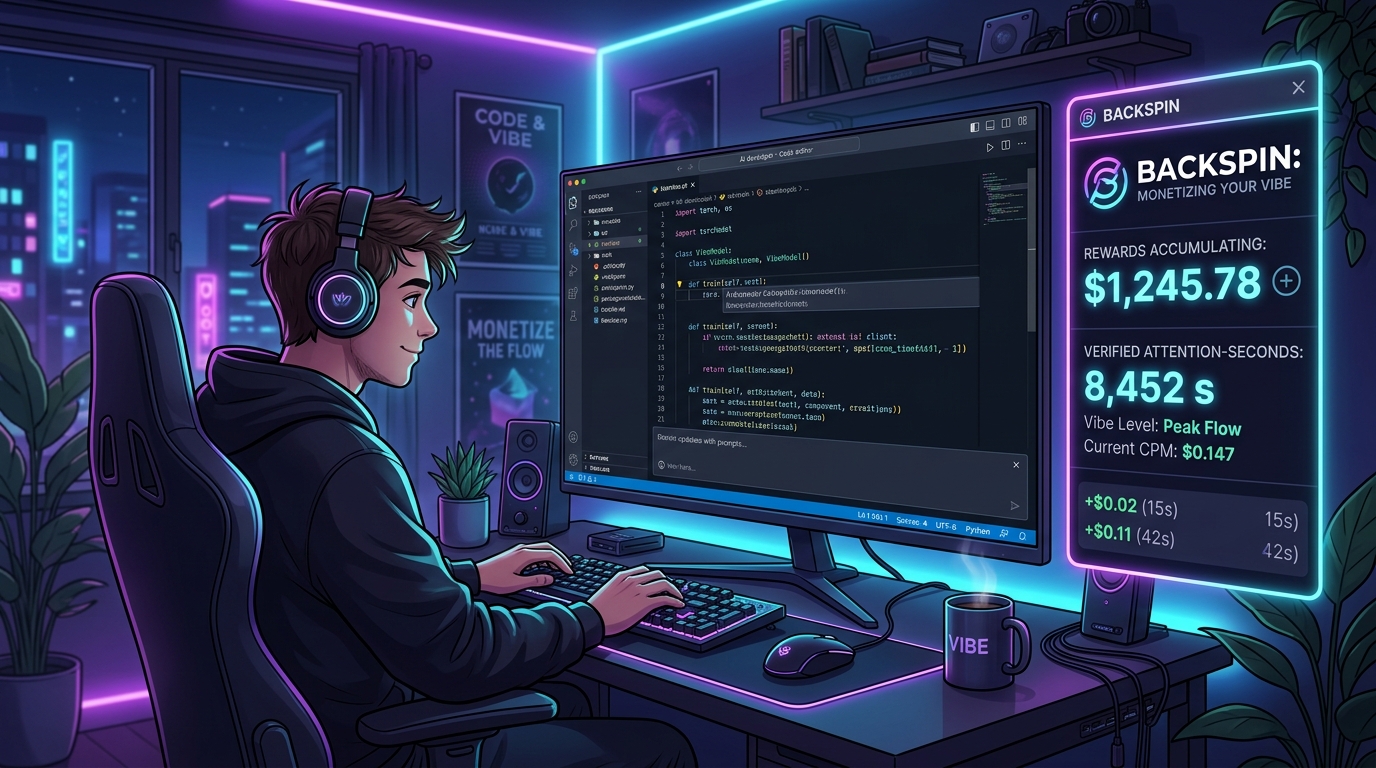
BackSpin describes itself as an open attention exchange for AI-native developer workflows. When your editor is waiting on an AI response, it shows a small discovery card in a side panel, such as a developer tool, database or open-source package, and credits verified attention-seconds toward rewards.
The model is different from banner ads: advertisers pay for quality-adjusted attention rather than clicks, and cards are meant to be static and ignorable. For the pricing details, see our separate explainer on the BackSpin attention exchange.
Reasons to stay skeptical
Any tool that pays for attention depends on advertiser demand, so rewards may be small or uneven. Read the payout terms and the privacy policy before connecting an account, and review what permissions an editor extension requests.
BackSpin states that it does not read your code or track keystrokes and that integrations are reversible. Those are claims to check, not guarantees from this article.
Trying new developer tools safely
New tools usually arrive through shared links, and short links hide the domain. Before you install or sign in, paste the link into Lewati, read the final destination, and compare it with the vendor's official site. A lookalike domain that asks for a login or a wallet connection is a common trap.
The same habit applies to download pages and invitation links of any kind: resolve first, check second, install last.